Alterity
Year: 2022
Location: Turin, IT
Category: Interactive Systems
Type: Research, Immersive Experience
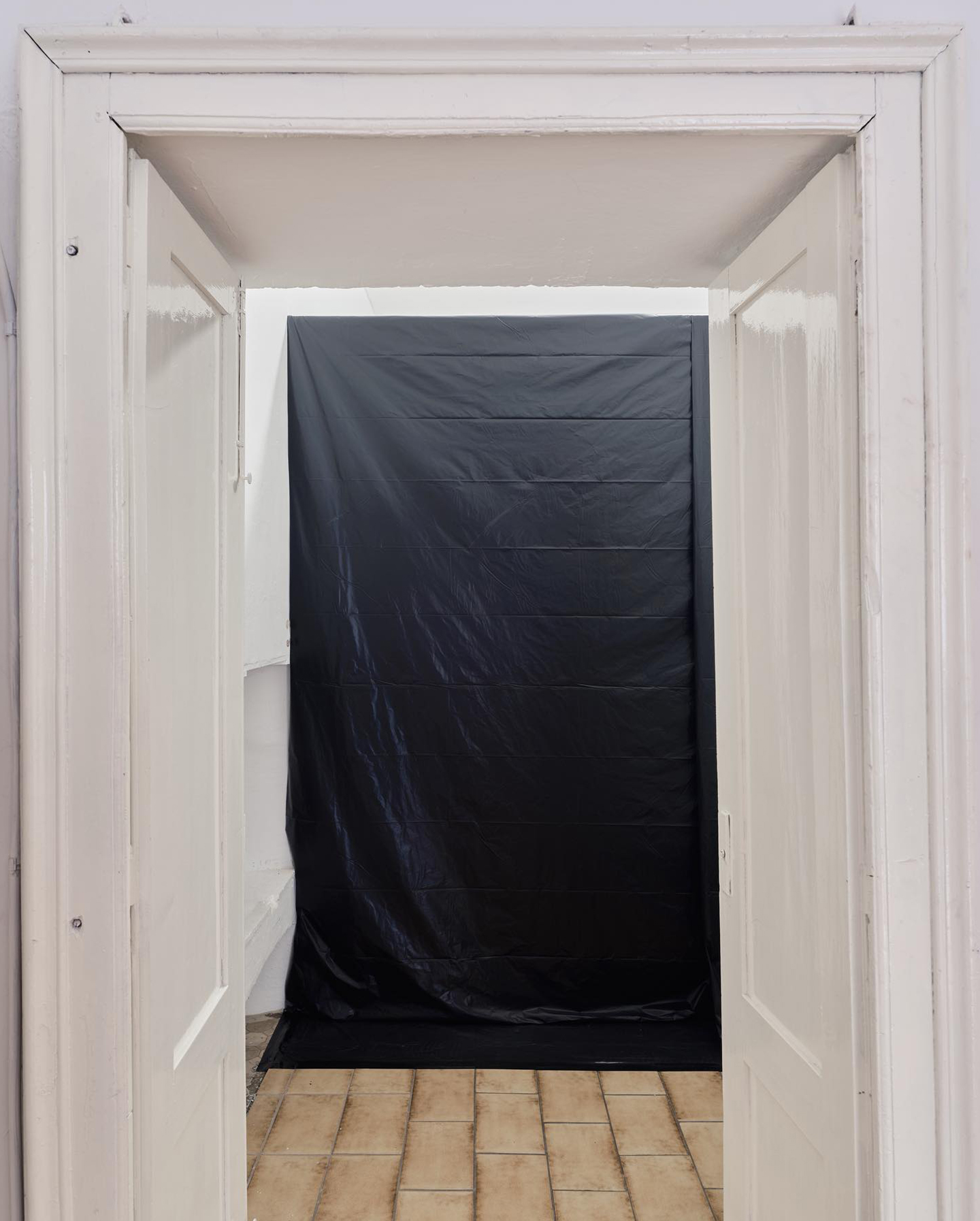
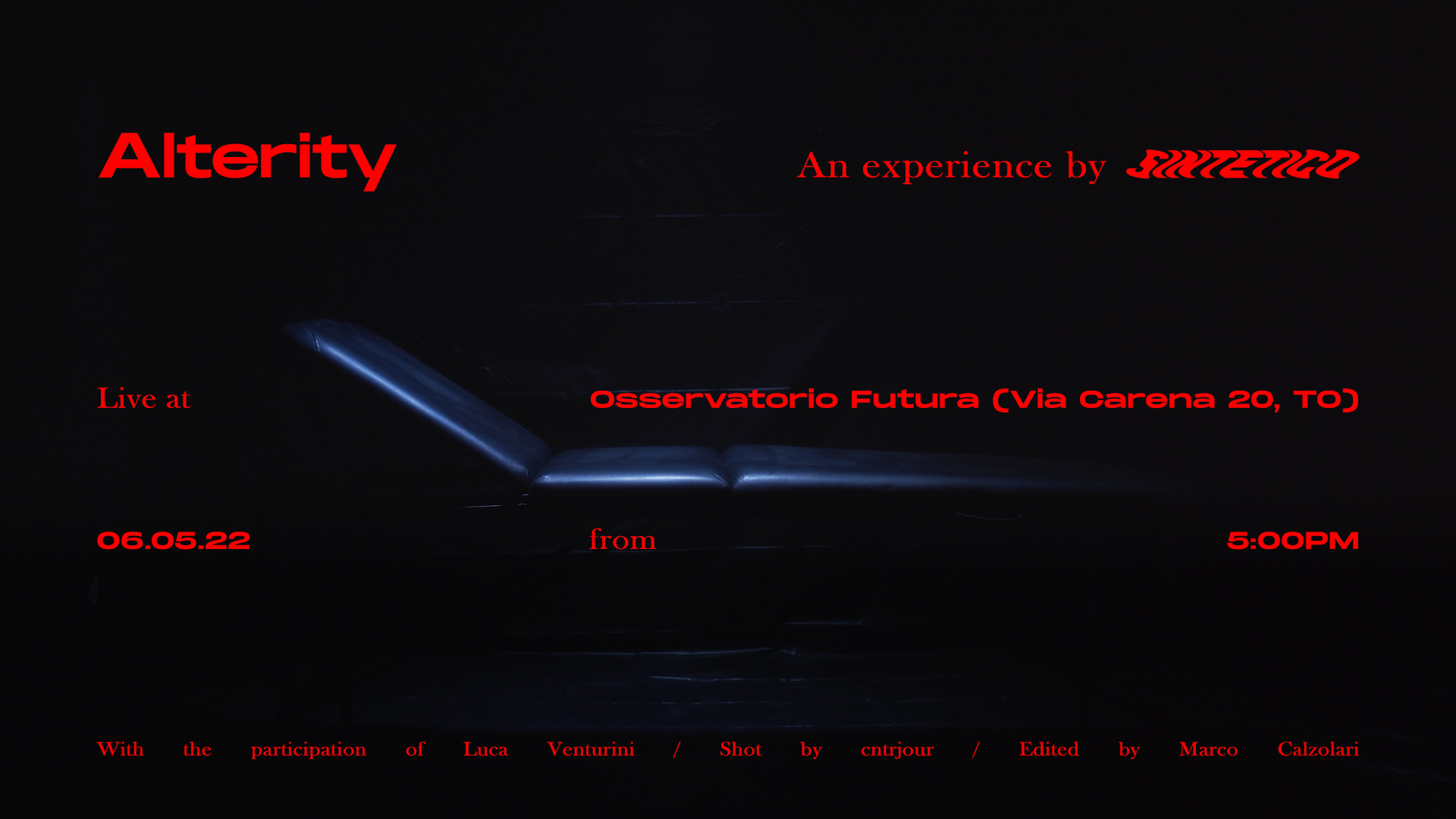
An immersive happening for one visitor at a time, presented at Osservatorio Futura — a contemporary art gallery and project space in the center of Turin.
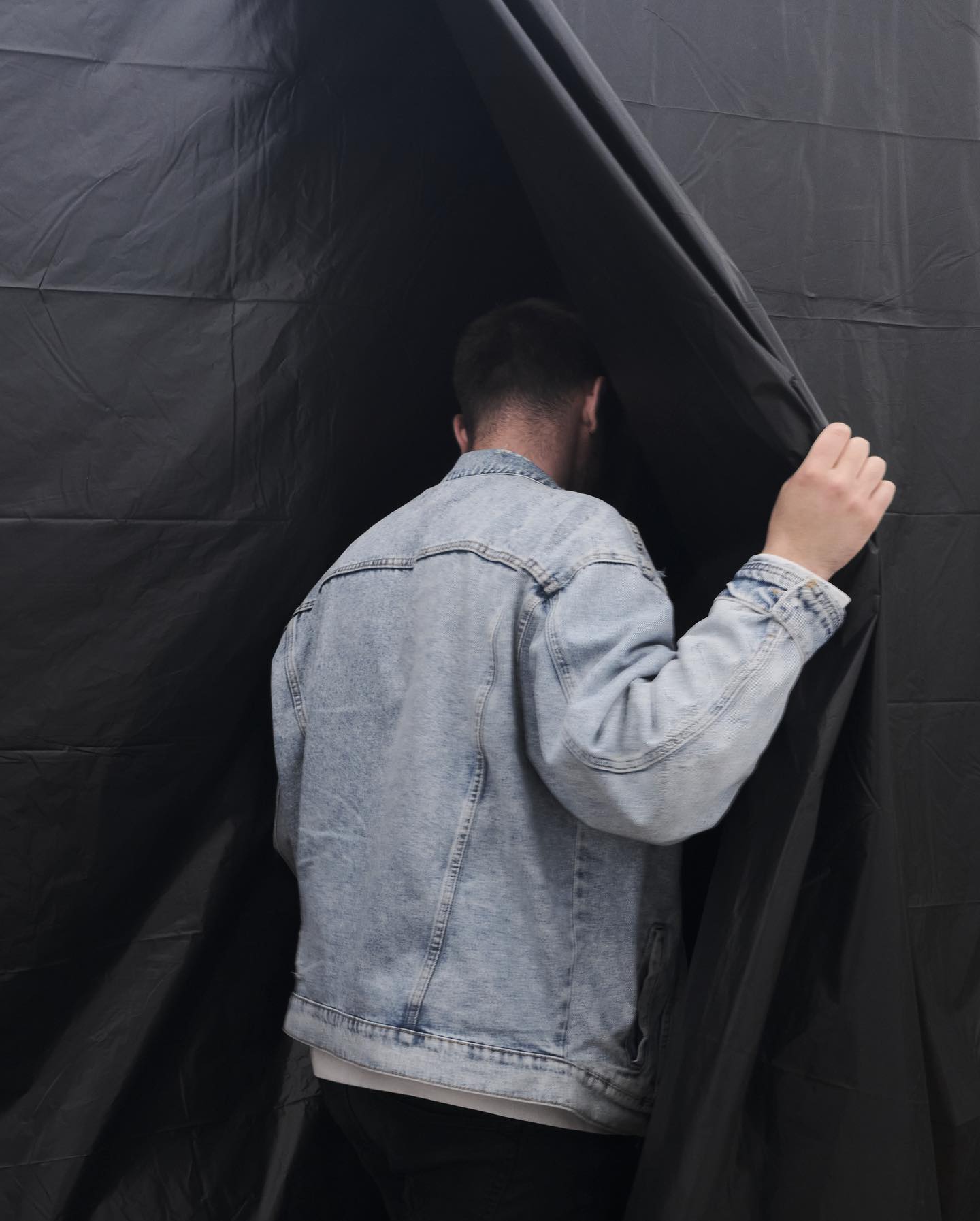
Each participant is prepared by an attendant — a ritual process that marks the threshold between the exhibition space and what follows. Once inside the dark chamber, vision is reduced to shadows and colour traces through a near-opaque ocular device; what remains dominant is sound — specifically, the amplified beat of one's own heart, captured through a microphone stethoscope strapped to the chest before entry. Lying on a cot in the dark, the visitor begins to listen inward. Then, gradually, they realize they are not alone. Someone is lying beside them — similarly equipped, similarly suspended — and has likely been there from the beginning. The heartbeats intertwine. Attention shifts between self and other, between one body and another, in the enclosing darkness. The encounter is brief, intimate, and unrepeatable: when the session ends, the visitor is led back out. The next person is prepared to enter, and will live a different experience entirely.
The sonic exchange between the interior of the chamber and the main exhibition space extends the work outward — making the private ritual only partially visible, and partially audible, to those who remain outside.
Un battito di cuori - Testo critico a cura di Matteo Gari /
“Le storie della scienza possono essere raccontate con grande efficacia come storie delle tecnologie. Queste tecnologie sono stili di vita, ordini sociali, pratiche di visualizzazione. Queste tecnologie sono pratiche specializzate. Come vedere? Da dove vedere? Quali limiti alla visione? A che scopo vedere? Chi vedere con che cosa? Chi riesce ad avere più di un punto di vista? Chi viene bendato? Chi porta il paraocchi? Chi interpreta il campo visivo? Quali altre capacità sensoriali desideriamo coltivare, oltre alla visione?”¹
La pratica di Marco Calzolari, in arte Sintetico (1996, Ferrara), si pone al confine tra arte, scienza e ricerca tecnologica, concentrandosi sull’esplorazione della coscienza umana attraverso la creazione di processi, esperienze e installazioni, che invitano le persone a mettersi in ascolto e riflettere introspettivamente. In particolare, è interessato al rapporto e alle dinamiche che intercorrono nell’incontro tra singole individualità attraverso dispositivi, tanto tecnologici quanto corporei. Proprio l’elemento tecnologico, in questo caso un vero e proprio apparato prostetico, diventa strumento per captare e tradurre gli impulsi corporei, come il battito cardiaco, mettendo in dialogo macchina ed esseri umani, espandendone l’esperienza percettiva.Alterity è un invito all’ascolto e all’introspezione che prende la forma di una pratica di alienazione temporanea e volontaria. Questo happening mette le sue radici nella pratica della deprivazione sensoriale, una deliberata e volontaria riduzione, o in alcuni casi rimozione, delle stimolazioni sensoriali del proprio corpo. Un processo che, in realtà, non è troppo distante da quello che avviene indossando delle cuffie isolanti o delle bende sugli occhi, diminuendo o azzerando rispettivamente il senso dell’udito o della vista. Esistono dispositivi complessi, persino in grado di isolare totalmente la percezione del gusto, dell’olfatto o del tatto, fino ad arrivare a deprivare il corpo della percezione della temperatura o del proprio posizionamento nello spazio fisico. La pratica della deprivazione sensoriale è stata, ed è tuttora, utilizzata prevalentemente nell’ambito della medicina alternativa e nelle ricerche in ambito psicologico, in quanto, brevi sessioni, svolte all’interno di apposite vasche di isolamento, permettono di entrare in uno stato di rilassamento estremamente adatto a indurre la meditazione. L’esposizione prolungata o forzata può, però, provocare all’opposto una gamma di effetti negativi che spaziano da un estremo stato di ansia fino ad arrivare a effetti allucinogeni o alla temporanea perdita dei sensi.
Alterity è tanto un esperimento quanto un rituale. Un microfono per il rilevamento del battito cardiaco e un dispositivo oculare sono gli strumenti che forniscono l’accesso alla dimensione parallela che si apre nello spazio di Osservatorio Futura. Una sorta di grotta in cui si è in grado di percepire solo ombre e spettri di colore, in maniera simile a ciò che avviene durante la somministrazione di uno stimolo uniforme e costante, anche conosciuta con il nome di effetto Ganzfeld². Questo è stato descritto per la prima volta, negli anni Trenta, dallo psicologo ed esponente della scuola tedesca della Gestalt, Wolfgang Metzger. Conosciuta e sfruttata fin dall’antichità, questa pratica è stata adottata soprattutto da culti misterici, religiosi o filosofici interessati a fenomeni di apparizioni mistiche, come nel caso degli adepti pitagorei che si recavano presso delle oscure grotte alla ricerca di una forma di saggezza superiore. Fenomeni simili sono ad esempio racconti di allucinazioni nel deserto o nelle distese bianche dell’artico.
Attraverso un’esperienza di isolamento, componente centrale dell’happening, avviene un processo di disvelamento, aperto alla partecipazione e all’osservazione esterna attraverso la proiezione di elementi uditivi e visivi. Le due prospettive, quella interna al rituale e quella dell’osservazione esterna, sono complementari e nella loro differenza creano un unicum.
In momenti di crisi è necessario concedersi una parentesi personale in cui mettersi in ascolto, restando sensibili all'alterità che ci accompagna, percepibile in un battito del cuore.
¹ D. J. Haraway, Manifesto Cyborg. Donne, tecnologie e biopolitiche del corpo, a cura di L. Borghi, introduzione di R. Braidotti, Milano, Feltrinelli 1995, p.118
² Dal tedesco “campo completo”.
A Beat of Hearts - Critical text curated by Matteo Gari /
“Stories of science can be told very effectively as stories of technologies. These technologies are lifestyles, social orders, visualization practices. These technologies are specialized practices. How to see? Where to see from? What limits to vision? What is the purpose of seeing? Who to see with what? Who is able to have more than one point of view? Who is blindfolded? Who wears blinkers? Who interprets the field of view? What other sensory abilities do we wish to cultivate, beyond vision?”¹
The practice of Marco Calzolari, aka Sintetico (1996, Ferrara), stands at the intersection of art, science and technological research, focusing on the exploration of human consciousness through the creation of processes, experiences and installations that invite people to listen and reflect introspectively. In particular, he is interested in the relationships and dynamics that arise in the encounter between individual subjects through devices that are both technological and bodily. The technological element itself — in this case, a true prosthetic apparatus — becomes a tool for capturing and translating bodily impulses, such as the heartbeat, placing machine and human beings in dialogue and expanding their perceptual experience.Alterity is an invitation to listening and introspection that takes the form of a practice of temporary and voluntary alienation. This happening is rooted in the practice of sensory deprivation: a deliberate and voluntary reduction, or in some cases removal, of the sensory stimuli affecting one’s body. In reality, this process is not so distant from what happens when wearing noise-isolating headphones or blindfolds, respectively reducing or eliminating the senses of hearing or sight. There are complex devices capable of totally isolating the perception of taste, smell or touch, even to the point of depriving the body of the perception of temperature or of its own position in physical space. The practice of sensory deprivation has been, and still is, used predominantly in the field of alternative medicine and in psychological research, since brief sessions carried out inside dedicated isolation tanks make it possible to enter a state of relaxation particularly suited to inducing meditation. Prolonged or forced exposure, however, can have the opposite effect, producing a range of negative consequences that extend from extreme anxiety to hallucinogenic effects or temporary loss of consciousness.
Alterity is as much an experiment as it is a ritual. A microphone for detecting the heartbeat and an ocular device are the instruments that provide access to the parallel dimension opening within the space of Osservatorio Futura. It is a kind of cave in which one is able to perceive only shadows and spectra of colour, in a way similar to what happens during the administration of a uniform and constant stimulus, also known as the Ganzfeld effect². This was first described in the 1930s by Wolfgang Metzger, a psychologist and exponent of the German Gestalt school. Known and exploited since antiquity, this practice was adopted above all by mystery cults and religious or philosophical traditions interested in phenomena of mystical apparition, as in the case of Pythagorean adepts who entered dark caves in search of a higher form of wisdom. Similar phenomena can also be found, for example, in accounts of hallucinations in the desert or across the white expanses of the Arctic.
Through an experience of isolation, a central component of the happening, a process of unveiling takes place, open to participation and external observation through the projection of auditory and visual elements. The two perspectives — the one internal to the ritual and the one belonging to external observation — are complementary and, through their difference, create a unified whole.
In moments of crisis, it is necessary to allow oneself a personal interval in which to listen, remaining sensitive to the alterity that accompanies us, perceptible in a heartbeat.
¹ D. J. Haraway, Manifesto Cyborg. Donne, tecnologie e biopolitiche del corpo, edited by L. Borghi, introduction by R. Braidotti, Milan, Feltrinelli, 1995, p. 118.
² From the German Ganzfeld, literally “complete field”.
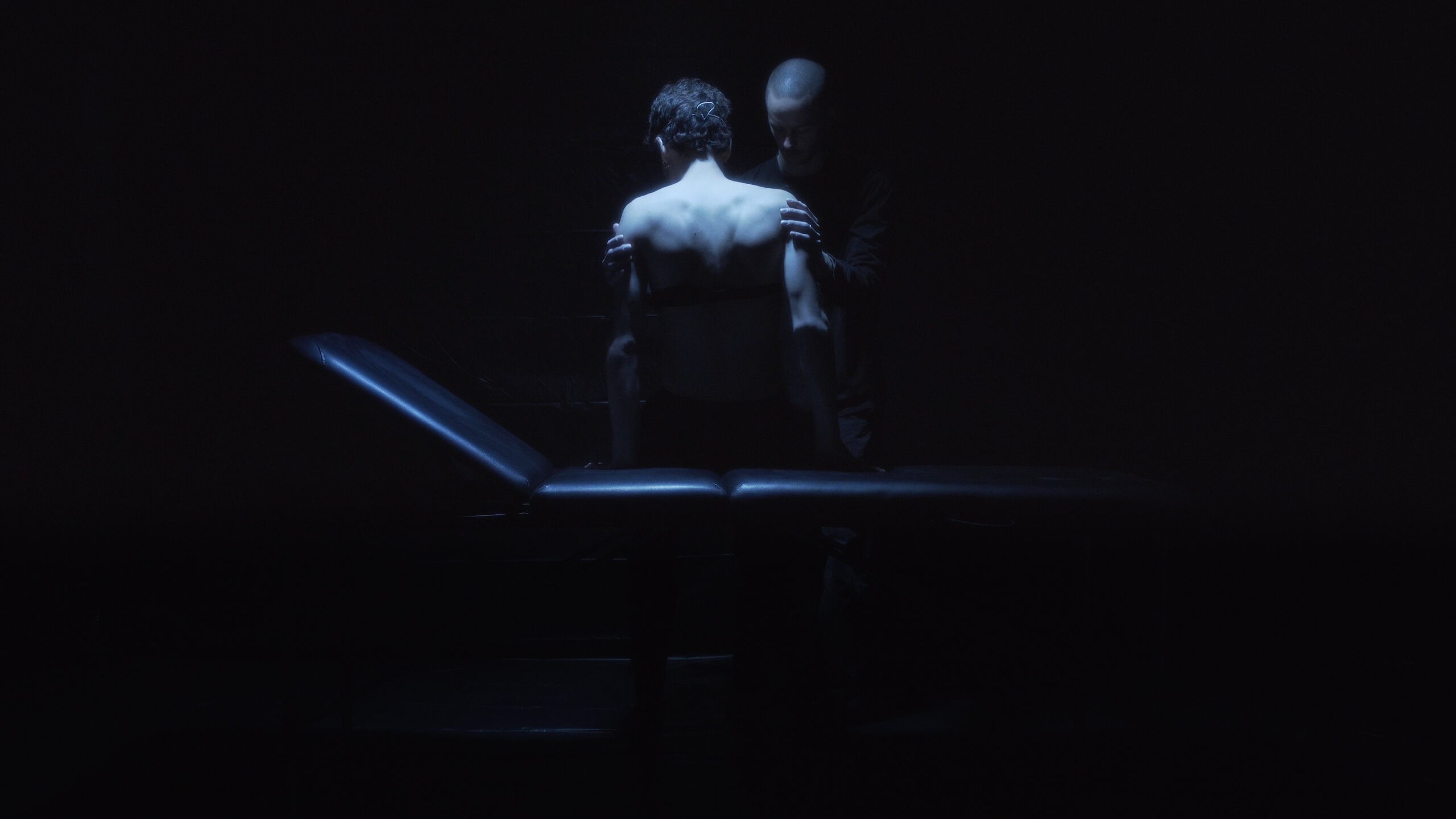
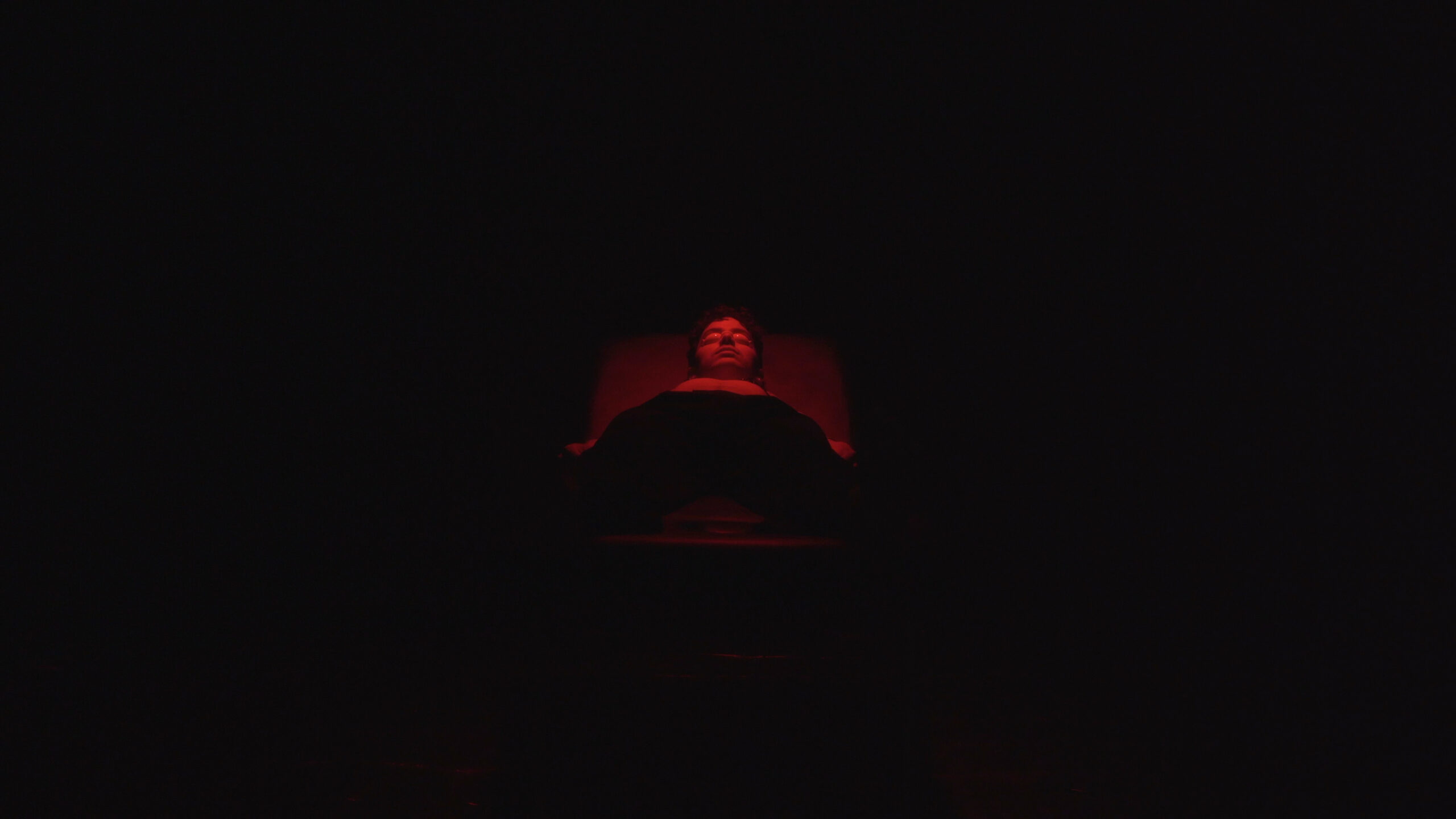
Visitors' hearts recorded at Osservatorio Futura during the opening of Alterity on 06.05.2022 - Sound engineer: Luca Venturini
©SINTETICO MACHINES 2026